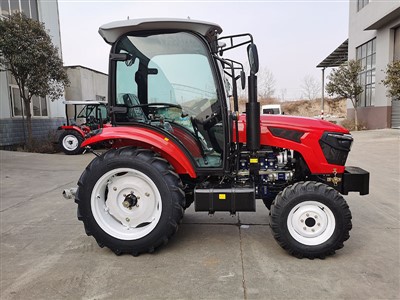


As a supplier of 50 HP 4x4 engines, I often encounter inquiries about the horsepower - to - displacement ratio of these engines. This ratio is a crucial factor in understanding the engine's performance, efficiency, and overall capabilities.
Understanding Horsepower - to - Displacement Ratio
The horsepower - to - displacement ratio is calculated by dividing the engine's horsepower by its displacement. Displacement refers to the total volume of all cylinders in the engine, typically measured in liters (L) or cubic centimeters (cc). A higher ratio generally indicates that the engine is more efficient at converting the volume of air - fuel mixture into power.
For a 50 HP 4x4 engine, the specific horsepower - to - displacement ratio can vary significantly depending on several factors. These include the engine's design, the technology used, and the intended application.
Factors Affecting the Ratio
- Engine Design: Modern engines often incorporate advanced features such as turbocharging or supercharging. These forced - induction technologies compress the incoming air, allowing more air - fuel mixture to enter the cylinders. As a result, the engine can produce more power from the same displacement, increasing the horsepower - to - displacement ratio. For example, a turbocharged 50 HP 4x4 engine might have a smaller displacement compared to a naturally - aspirated engine of the same horsepower, resulting in a higher ratio.
- Fuel Injection and Combustion Technology: High - tech fuel injection systems can precisely control the amount and timing of fuel delivery, optimizing the combustion process. This leads to more efficient use of fuel and better power output. Engines with direct fuel injection, variable valve timing, and advanced ignition systems can achieve a more favorable horsepower - to - displacement ratio.
- Intended Application: The use case of the 4x4 vehicle also plays a role. An engine designed for heavy - duty off - road applications may prioritize torque and durability over a high horsepower - to - displacement ratio. On the other hand, an engine for a more performance - oriented 4x4 might be engineered to maximize this ratio.
Typical Ratios for 50 HP 4x4 Engines
In general, for naturally - aspirated 50 HP 4x4 engines, the displacement can range from around 1.5 to 2.5 liters. This would result in a horsepower - to - displacement ratio of approximately 20 - 33 HP per liter. For example, if an engine has a displacement of 2 liters and produces 50 HP, the ratio is 50 HP / 2 L = 25 HP/L.
Turbocharged or supercharged 50 HP 4x4 engines can have a smaller displacement, perhaps in the range of 1.0 to 1.5 liters. This would yield a higher horsepower - to - displacement ratio, potentially reaching 33 - 50 HP per liter.
Our 50 HP 4x4 Engine Offerings
We are proud to offer a range of 50 HP 4x4 engines that are designed to meet various needs. Our engines are engineered with the latest technologies, ensuring a good balance between power, efficiency, and durability.
- 50hp Greenhouse Tractor: This engine is specifically designed for greenhouse tractors. It offers smooth operation, low emissions, and a reliable power output. The horsepower - to - displacement ratio is optimized to provide sufficient power for the tasks required in greenhouse environments while maintaining fuel efficiency.
- 50hp Tractor Flat Floor: Our flat - floor tractor engine is built for versatility. It can handle a variety of agricultural tasks, from plowing to hauling. The engine's design focuses on delivering consistent torque and power, with a well - balanced horsepower - to - displacement ratio.
- 50hp Tractor: Our standard 50 HP tractor engine is a reliable choice for general agricultural and light industrial applications. It combines performance, efficiency, and ease of maintenance, with a horsepower - to - displacement ratio that offers a good compromise between power and fuel consumption.
Importance of the Horsepower - to - Displacement Ratio in Decision - Making
When choosing a 50 HP 4x4 engine, the horsepower - to - displacement ratio is an important consideration. A higher ratio can mean better fuel economy, as the engine can produce more power from less fuel. It can also result in a smaller and lighter engine, which can improve the vehicle's handling and overall performance.
However, it's important to balance this ratio with other factors such as torque, durability, and cost. An engine with a very high horsepower - to - displacement ratio may require more advanced technology and maintenance, which can increase the initial and long - term costs.


Contact Us for Your 50 HP 4x4 Engine Needs
If you are in the market for a 50 HP 4x4 engine, we invite you to contact us for more information. Our team of experts can help you understand the horsepower - to - displacement ratio of our engines and how it relates to your specific needs. We can also provide detailed specifications, pricing, and support to ensure that you make an informed decision. Whether you are a farmer, a contractor, or an equipment manufacturer, we have the right 50 HP 4x4 engine solution for you.
References
- Heywood, J. B. (1988). Internal Combustion Engine Fundamentals. McGraw - Hill.
- Crolla, D. A. (2012). Automotive Mechanics. Elsevier.